
Indian businesses' weak ability to compete overseas says much about the infirmities imposed by the intensity of government dominance of economic policy and the nature of this dominance, observes Kanika Datta.

The government will release the Index of Industrial Production for July 2015 on Friday, September 11, 2015.

Sensex,Nifty to remain under pressure through the week.

'Bharat has been leading, but it cannot carry India as the bulk of the sales come from India in terms of volume and profitability.'
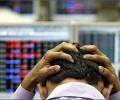
Markets finished the session on a dismal note with Sensex closing at its lowest level since August 2014.

'That is the one headline the world is reading about India this week, and it is a potentially damaging story...' 'I don't think a panic mentality has set in, but this story is one that investors and market watchers are absolutely seized with.'
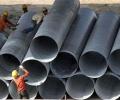
European Union steel prices hit their lowest since 2004

Nirmala Sitharaman's messaging was clear when she presented a well-balanced Budget with an eye on state elections in nine states followed by a general election next year, observes Ramesh Menon.

'This kind of love from our audience shows that our music is working.'

In four days, Sensex has fallen by 5,815.25 points. From the 30-share pack, 22 companies closed the day lower, led by Bajaj Finance, Maruti Suzuki India, Axis Bank, M&M, Tech Mahindra and ONGC, plunging up to 10.24 per cent.
'India has an advantage because we produce more cotton and we have more workforce.'

The G-20 leaders under the chairmanship of Saudi Arabia's King Salman held an extraordinary video conference in which they resolved to use all available policy tools to minimise the economic and social damage from the pandemic that has killed over 21,000 people and infected more than 470,000 globally.

This announcement will widen the base of investors, especially mid-sized financial institutions.

Financials were among the top losers along with Sun Pharma and index heavyweight Reliance Industries

India's largest garment hub Tirupur continues to reel from the effects of the pandemic, with almost 10 per cent of its orders for the upcoming season getting diverted to Bangladesh, Vietnam, Cambodia and China. The sector had seen a drop of about 9 per cent in exports during the first wave, but the impact is likely to be more this time, according to industry experts. Being one of the epicentres of Covid cases in the state, a majority of manufacturing units in the textile belt were closed for almost six weeks during the second wave.

'Earnings revival could be two quarters away.'

Rise in crude oil price and rally in global equities aided the sentiment

Few market participants will stick their neck out to give a target for the Sensex during Samvat 2065, a stark change from the last year, which reflects the overall mood in the Indian equity markets.

WhatsApp has scrapped its May 15 deadline for users to accept its controversial privacy policy update and said not accepting the terms will not lead to deletion of accounts.

Usually, a fall in oil prices is followed with a cut in retail prices of auto fuels and the government passes on the benefit to consumers. However, Morgan Stanley believes gains this time around will remain capped.
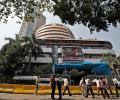
Broader markets underperformed the benchmark indices with BSE Midcap and Smallcap indces slipping 0.8%-1.1%

So unless you are convinced of getting your market timing absolutely bang on everytime, opting for SIPs is more realistic from a logistical and psychological standpoint, says Larissa Fernand
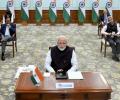
In his address at an extraordinary video conference of the G-20 leaders, Modi also urged the grouping to come out with a concrete action plan to fight the pandemic and said human beings rather than economic targets should be put at the centre of its vision for global prosperity and cooperation.

The stubbornly high global crude oil prices are opening up a can of worms to heightened inflation risks and likely to disrupt government's fiscal maths along with deteriorating global financial conditions.

Rate-sensitive sectors like banks, realty and auto witnessed heavy selling pressure ahead of the RBI Monetary policy which is scheduled on September 29.
In the longest recession since the 1930s, the US economy crumbled on the back of the housing market's collapse leading to a global meltdown.

The World Bank on Tuesday projected India's economy to grow at 8.3 per cent in 2021 and 7.5 per cent in 2022, even as its recovery is being hampered by an unprecedented second wave of the COVID-19, the largest outbreak in the world since the beginning of the deadly pandemic. The Washington-based global lender, in its latest issue of Global Economic Prospects released here, noted that in India, an enormous second COVID-19 wave is undermining the sharper-than-expected rebound in activity seen during the second half of Fiscal Year 2020/21, especially in services.

Top losers in the Sensex pack included ICICI Bank, Tata Steel, Vedanta, HDFC IndusInd Bank, Tata Motors, RIL and ONGC -- falling up to 4.45 per cent.
Mature markets globally have either become saturated or have slowed down. The emerging markets have therefore become strategically important for these companies. The contribution of Indian operations to the global sales of these multinational behemoths is still small -- 1.5 to 3 per cent -- but this share is bound to grow given the buoyancy in the Indian market.
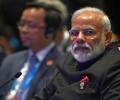
India has been forcefully raising the issue of market access as well as protected lists of goods mainly to shield its domestic market as there have been fears that the country may be flooded with cheap Chinese agricultural and industrial products once it signs the deal.

The soaring prices of metals like lithium, nickel and cobalt, which are the primary constituents of the cell, as well as supply chain bottlenecks, are also pushing up the cost of batteries

While traditional automakers in India are reeling under a global shortage of semiconductors, the country's electric vehicle (EV) makers, too, are now facing a shortage of lithium-ion batteries, a key raw material. The soaring prices of metals like lithium, nickel and cobalt, which are the primary constituents of the cell, as well as supply chain bottlenecks, are also pushing up the cost of batteries. Battery manufacturers say that prices have been increasing every quarter since the beginning of 2021.
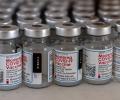
Currently, the country is using two 'made-in India' jabs -- Covishield and Covaxin -- to inoculate its billion-plus population and has administered 20 crore doses since launching the world's largest vaccination drive in mid-January. A third vaccine, Russian-made Sputnik V, has been approved by the government and is being used on a smaller scale at present.

Market breadth was weak with 1,260 advances and 1,597 losers on the BSE.

Reliance Jio to take over mobile business assets of troubled RCom at an estimated value of Rs 24,000-Rs 25,000 crore.

'Google and Facebook need to be tamed, their garb of 'Investing in India's future' need to be pulled off,' observes Vibhu Arya.

Indian markets ended on a lower note after the stimulus announced by the European Central Bank (ECB) failed to meet expectation.
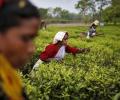
The tea industry, hit by rising costs, falling prices and political unrest in the North Bengal plantations, is especially vulnerable to the COVID-19 lockdown.

Airlines sought a limited period concession of the standing rule of slot allocation, which mandates that firms must operate at least 80 per cent of their allocated slots.

'I was born a lower middle-class person, am one today and will die as one,' Billboard's International Power Player Devraj Sanyal tells Vanita Kohli-Khandekar.
